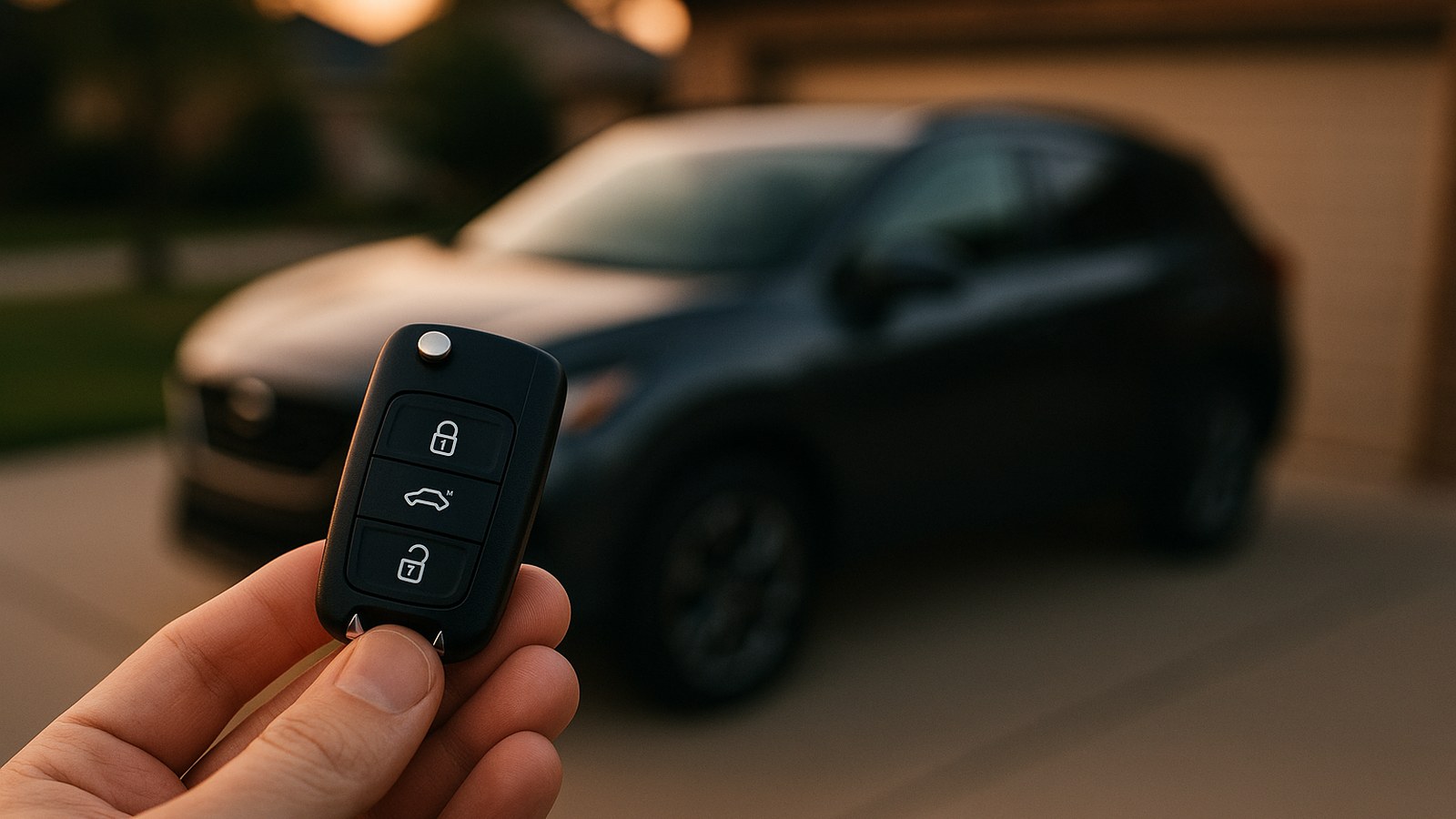
The story behind the second key
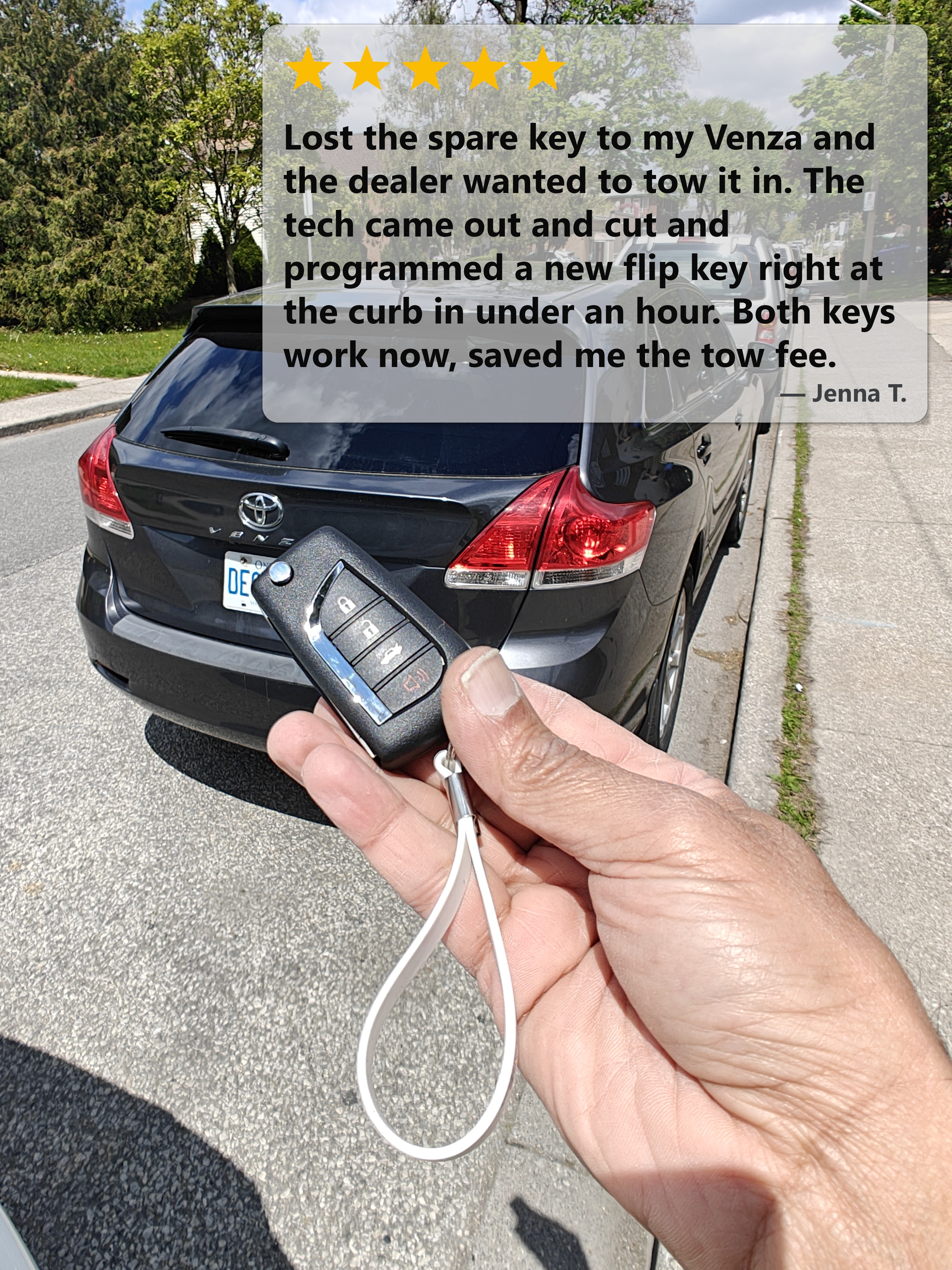
A charcoal Toyota Venza sat at the curb on a residential street near the Walmart Supercentre on the south side of Windsor while a spare key was cut and programmed beside it. The spare that came with the car had gone missing, and with only one key left the owner wanted a backup made before that last key became a problem. The dealer route meant a tow and a drop-off; a mobile visit meant the work happened where the car was parked.
A single visit to the parking spot, on-site decoding and programming, and the Venza left with two fully working keys: the original plus an OEM-equivalent four-button transponder flip key, the mechanical blade cut to the door lock code, and the new key paired to the car's immobilizer through the Transponder Amplifier. The whole job finished at the curb, with no tow and no drop-off, which is the kind of spare-key visit that makes up a large share of what a mobile locksmith does across Essex County.
From the Google Business Profile update
The image below is the actual photo Canadian Locksmiths posted to its Google Business Profile after the appointment. The short customer note on the embedded card reads:
★★★★★
"Lost the spare key to my Venza and the dealer wanted to tow it in. The tech came out and cut and programmed a new flip key right at the curb in under an hour. Both keys work now, saved me the tow fee."
Shared by Jenna T. on the Canadian Locksmiths Google Business Profile
Vehicle and module specifics
The car covered in this post is the first-generation Toyota Venza, the AV10 platform that ran here across the 2011 through 2013 model years in the trims described. This is a turn-key transponder car, not a proximity smart-key Toyota: the key goes into the ignition, and the anti-theft side runs on the immobilizer, with the chip in the key read by a Transponder Amplifier coil wrapped around the ignition lock.
| Detail | Specification |
|---|---|
| Platform | First-generation Venza, AV10 |
| Model years covered on-site | 2011, 2012, 2013 |
| Trim coverage | LE, XLE, Limited |
| Fob style | Four-button transponder flip key, turn-key ignition |
| Button layout | Lock, unlock, trunk, panic |
| Immobilizer system | Toyota immobilizer read through the Transponder Amplifier (ignition ring coil) |
| Mechanical blade | TOY43AT anti-tamper keyway, cut on the Lishi TOY TOY43AT (TR47 blank) |
| Fob battery | CR2016 |
| Blade code source | Door lock decode or Toyota key code lookup against VIN |
The exact key revision is confirmed against the VIN before anything is cut, because the transponder generation on this era of Toyota shifted around these years, and a key with the wrong chip family will sometimes cut and turn the ignition while the immobilizer refuses to release the engine. The chip is read and confirmed off the actual key and the fob part number, not assumed from the model year.
Tools used on this job
| Stage | Tool |
|---|---|
| Door lock decode (when no key code on file) | Lishi TOY TOY43AT (TOY43AT anti-tamper keyway, TR47 blank) |
| Blade cutting | Triton PLUS Automotive Edition (Lock Labs), cut to the door code |
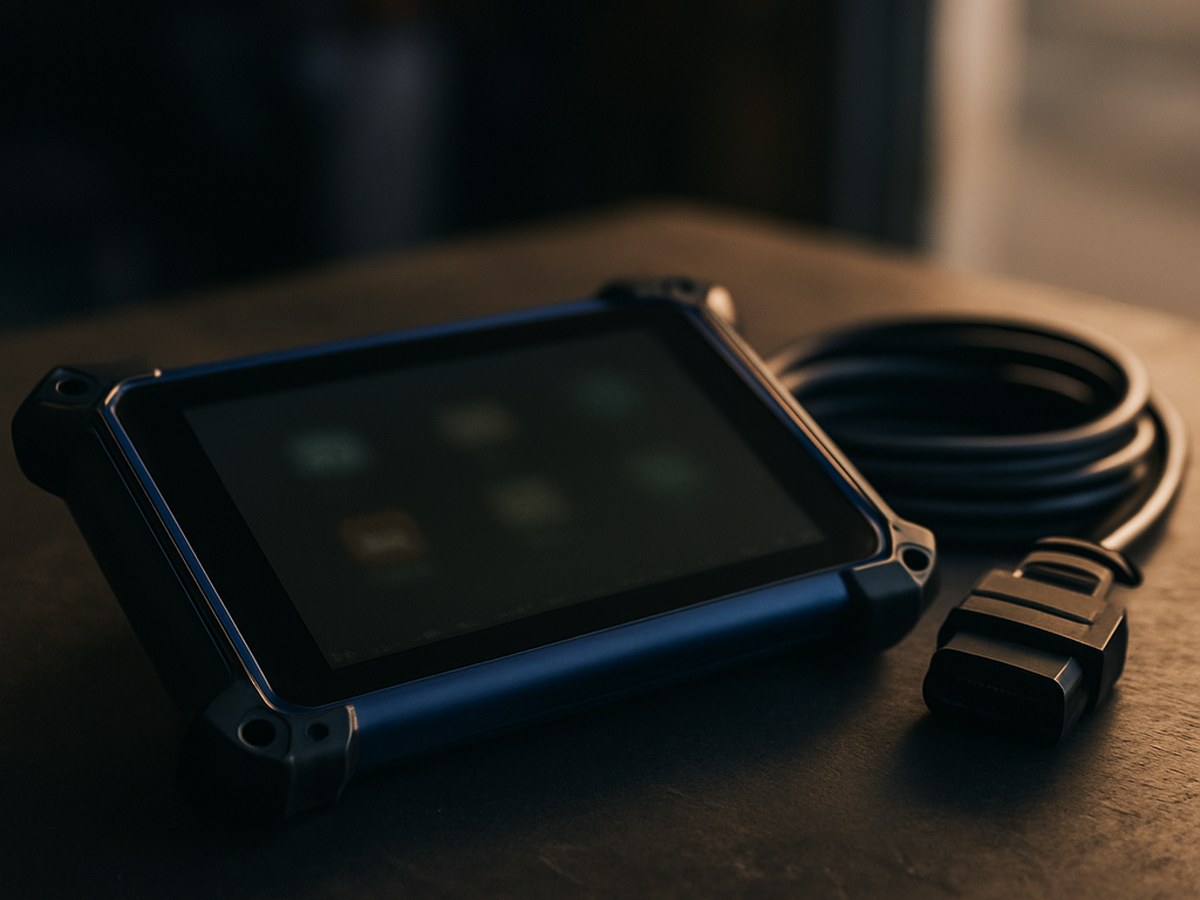
| Key registration | Autel IM608 Pro with Xhorse VVDI over OBD-II to the immobilizer |
| Security access | NASTF Vehicle Security Professional (VSP) channel for immobilizer reset data when required |
| Verification | Ignition crank, all-door lock and unlock range test, trunk and panic test |
The part that separates a real Toyota key job from a parking-lot promise is the immobilizer layer. A working key present makes a spare a straightforward add: with the Autel IM608 Pro on the OBD-II port, the new transponder is registered to the immobilizer alongside the original. The mechanical side still has to be right, which is why the key cut is decoded to the door lock rather than traced from the worn original. Where the depth appears is all-keys-lost: with zero working keys, the Venza has to be taken into a locked-state immobilizer reset that needs manufacturer data tied to the VIN, and that data is released through the NASTF VSP channel rather than guessed or bypassed. For that deeper recovery Canadian Locksmiths runs the dealer-level Toyota diagnostic software over a J2534 pass-through with NASTF VSP authorization, the same security gate the dealer uses.
What gets done on the appointment
The high-level sequence the technician follows for a Venza spare transponder key:
- Confirm vehicle details. Read the VIN at the dash and the door jamb, note the model year and trim, and confirm one working key is present. Quote the spare rate against the verified key revision.
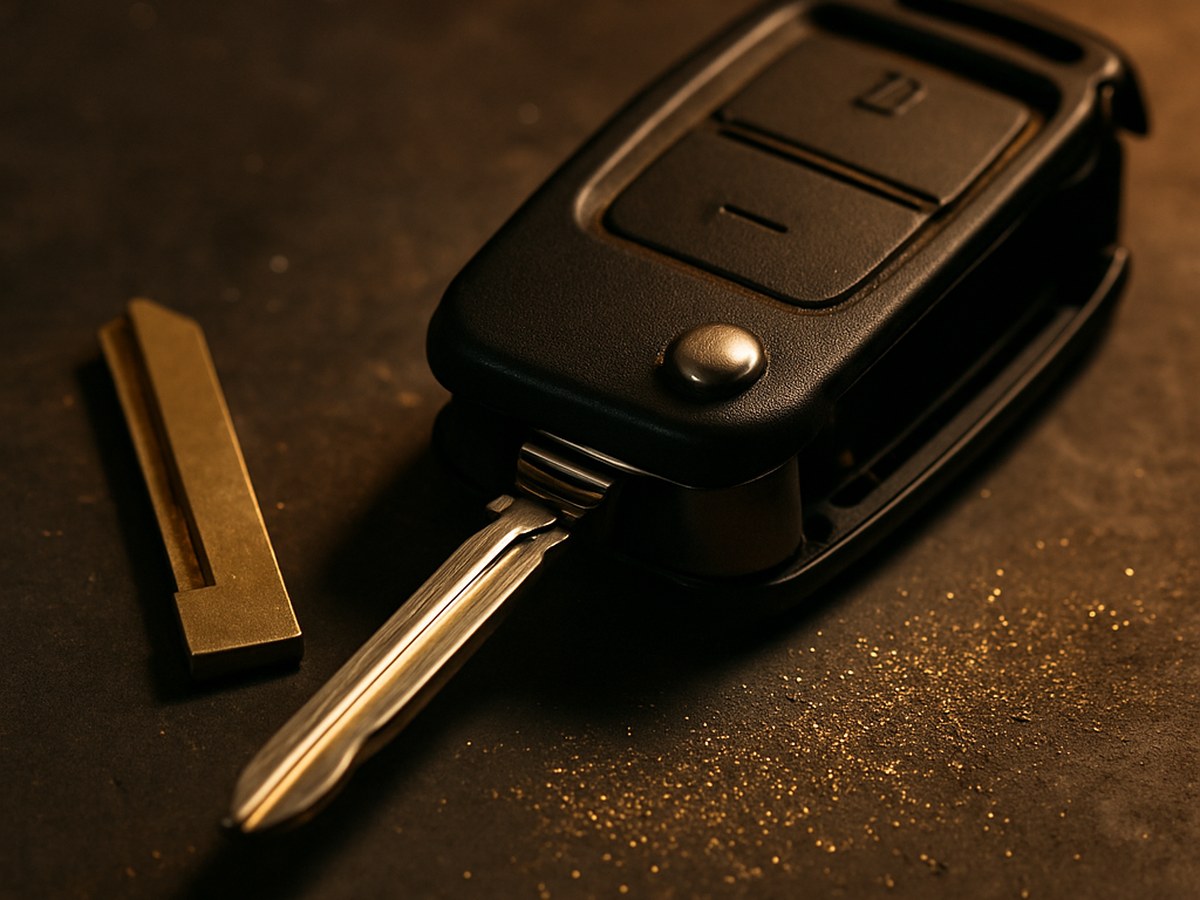
- Cut the mechanical blade. If the door code is on file, the blade is cut to code on the Triton PLUS. If not, the technician decodes the driver door cylinder on the Lishi TOY TOY43AT first, then cuts the TR47 blank.
- Connect and read the system. With the Autel IM608 Pro on the OBD-II port, the immobilizer is read and the transponder key that the car will accept is confirmed.
- Register the new key. The new transponder is added to the immobilizer alongside the original, with any required immobilizer reset data pulled through the NASTF VSP channel.
- Verify everything. The technician confirms the ignition cranks and runs on the new key, then range-tests remote lock, unlock, trunk, and panic at all four doors.
- Hand off. The original key stays fully functional. The new flip key is handed over with its blade folded and the CR2016 remote confirmed working.
Troubleshooting common Venza key issues
These are the calls Canadian Locksmiths handles from Venza owners who tried a budget option first.
- The new key turns the ignition but the engine dies after two seconds. That two-second start-and-stall is the immobilizer classic: the mechanical cut is correct so the lock turns, but the transponder was never registered, so the immobilizer cuts fuel and spark. Registering the chip to the car properly clears it.
- A budget online flip key cuts fine but never programs. The listings look identical, but the chip inside can be the wrong transponder family for the car. A key one generation off the Venza's immobilizer will cut and fold like the right key and then fail the registration every time.
- The remote buttons work but the key will not start the car. The remote and the transponder are separate. A shop that got the buttons blinking but skipped or failed the immobilizer registration leaves the owner with a key that locks the doors and pops the trunk but will not run the engine.
- The blade binds or will not enter the door lock. The Venza uses the TOY43AT anti-tamper keyway, and a blank cut on the wrong profile, or a hand-traced copy, catches on the wafers. Decoding the cylinder and cutting a fresh TR47 to the door code fixes a key that fights the lock.
Insider notes most owners never hear
The Toyota transponder world of this era is one of the more misunderstood corners of consumer key work. The notes below are the technical reality from inside the job, not the marketing version.
1. The Transponder Amplifier is the coil that reads the key
There is no proximity antenna on this car. When the key goes into the ignition, a coil of wire wrapped around the lock cylinder, the Transponder Amplifier, energizes the tiny chip in the key head, the chip answers with its code, and the immobilizer decides whether to release the engine. That amplifier ring is the reason a transponder car will crank on a correctly cut but unprogrammed key and then stall: the mechanics are satisfied, the electronics are not.
2. The chip is confirmed off the key, not assumed from the year
Toyota moved through several transponder generations across the 2000s and 2010s, and the AV10 Venza sits right on the boundary where the older fixed-code chip and the newer rolling-code family overlap in the field. Rather than guess from the model year, the technician reads the transponder off the actual key and the fob part number and matches the blank to what the car's immobilizer will actually accept. A key that is one chip generation off will cut, fold, and turn the lock, and then never satisfy the registration. Confirming the chip first is the step that prevents a wasted blank.
3. This is a transponder turn-key car, not a smart-key Toyota
Owners who have driven a newer push-button Toyota expect a proximity fob, but the AV10 Venza is a turn-key car with a transponder flip key. The key physically enters the ignition, and there is no passive entry or push-button start to code. That makes the job simpler in some ways and different in others: there is no proximity antenna to align, but the mechanical blade and the transponder both have to be exactly right or the car will not run.
4. The TOY43AT keyway is anti-tamper for a reason
The blade is cut on the Lishi TOY TOY43AT, the anti-tamper version of the Toyota keyway, not the older plain TOY43 and not the reverse TOY43R used on other makes. The anti-tamper lifter is what lets the decoder read the tighter wafer stack in these locks cleanly. Order a blank cut on the wrong profile and it looks close enough to fool an owner, then binds or will not enter the door lock at all. The TR47 blank matched to the TOY43AT profile is the one that fits.
5. All-keys-lost is a deeper job than a spare
With one working key present, the immobilizer already trusts a key and the new transponder registers through a standard add. With zero working keys, the car has to be taken into a locked-state immobilizer reset that needs manufacturer data tied to the specific VIN, stricter timing, and a deeper routine to seat a first key the immobilizer will accept. That all-keys-lost path runs through the dealer-level Toyota software over J2534 with NASTF VSP authorization, and it is best handled before the car is towed anywhere.
6. The security access is what NASTF VSP credentials unlock
Adding a key with a working key present is a standard registration, but immobilizer reset data for the deeper work is gated behind manufacturer-authorized access. The legitimate way to obtain it is the NASTF Vehicle Security Professional (VSP) channel, a North American registry that vets locksmiths and gives credentialed professionals manufacturer-authorized access to security data. Canadian Locksmiths holds active NASTF VSP credentials. A shop without that registration is left guessing or chasing grey-market workarounds, which is where the half-programmed keys come from.
7. Why the budget online flip key so often fails
The four-button flip keys listed online look identical, but they span transponder families and board revisions, and not every listing matches the Venza. A key that is a revision off will cut cleanly, fold like the right key, and then fail the immobilizer registration, leaving an owner with a blade that turns the lock but a chip the car will not accept. Confirming the key revision against the VIN before anything is cut or paired is the single step that prevents that outcome.
8. Voltage discipline during the write window
A key-registration session keeps the network awake far longer than a normal key-off, and the immobilizer is mid-conversation with the tool. If the battery is marginal, the 12V rail can sag during the write and the registration can abort partway through. Canadian Locksmiths clamps a battery support unit rated for at least 25 amps continuous, a CTEK PRO25S or a Schumacher INC-25A, to the jump points for the full visit so the rail never drops during the write.
9. A used flip key carries its old registration
A key pulled from another Venza still holds its binding to the previous car. Dropping it into a different vehicle without clearing that state throws a mismatch and the immobilizer rejects it. Some salvage keys arrive ready to re-seat, most do not. Sorting whether a used key can be reused, and clearing the old binding when it can, is what separates a used key that actually works from one a customer paid for and then blames on the locksmith.
10. The CR2016 and the blade still matter
The Venza flip key runs a CR2016 coin cell, a thinner cell than the CR2032 most owners assume is inside, and a weak or wrong cell shows up as a remote that has to be pressed twice or held close to the car. And the mechanical blade is not an afterthought: it is cut to the door code on the Triton PLUS Automotive Edition, because a hand-traced or loosely cut blade binds in the door wafer and turns a simple lock-turn into a fight. The chip runs the engine, but the blade is what gets the owner into the car.
Cost and what to expect
A Toyota Venza spare transponder flip key, cut and programmed and verified on-site in Windsor or anywhere across Essex County, starts at $149. Most jobs fall between $199 and $299+ once the specific key revision, the door blade work, and the labour time are accounted for. A full quote is given before the technician dispatches, and there are no surprise add-ons after the appointment.
For comparison, the typical dealer route on the same car involves a tow to the dealership (often $150 to $250+), a service bay slot that may be days out, and a labour book rate that lands in the $400 to $650+ range before the key itself is invoiced. Canadian Locksmiths holds active NASTF VSP credentials, the same authority gate the dealer relies on for security access, and runs the work mobile.
Book a Toyota Venza spare key with Canadian Locksmiths or call (519) 979-1270 for a full quote against the VIN before dispatch.
Frequently asked questions
Q: Can a Toyota Venza key be programmed without going to a dealer? A: Yes. Canadian Locksmiths cuts the blade to the door code and registers the new transponder to the immobilizer over OBD-II, with any required security access pulled through the NASTF VSP channel, the same authority the dealer uses, and finishes the job at the customer's location in one mobile visit with no tow.
Q: Why can't a budget online key just be programmed to a Venza? A: The chip inside a budget key is often the wrong transponder family for the car. It will cut and fold like the right key, but the immobilizer will not accept it, which is why a mismatched key turns the ignition and then stalls the engine or never registers at all. The key revision is confirmed against the VIN before anything is cut.
Q: Will the original key still work afterward? A: Yes. The new key is registered alongside the original without removing it. Both keys leave the appointment turning the ignition and running the engine, with the remote functions working on each.
Q: What happens if I lose both Venza keys? A: All-keys-lost is a deeper job than a spare. With no working key, the car needs a locked-state immobilizer reset that uses manufacturer data tied to the VIN, released through the NASTF VSP channel. It is best handled before the car is towed, and Canadian Locksmiths can do it mobile in most cases.
Q: How long does the appointment take? A: A spare transponder key with one working key already present is generally a 45 to 75 minute appointment, depending on whether the door blade is decoded on-site or cut to a known door code, and on the registration running clean on the first pass.
Q: Does Canadian Locksmiths ask for proof of ownership? A: Canadian Locksmiths may, at its sole discretion, request proof of vehicle ownership or identity before, during, or after performing services, and may decline service where ownership cannot be reasonably established. Questions are welcome any time on the FAQ page or by phone.
Q: Does Canadian Locksmiths service Toyotas outside Windsor? A: Yes. Mobile dispatch covers Windsor, Tecumseh, LaSalle, Lakeshore, Amherstburg, Essex, Kingsville, Leamington, and the rest of Essex County, Ontario. Recent jobs are shared on the reviews page.